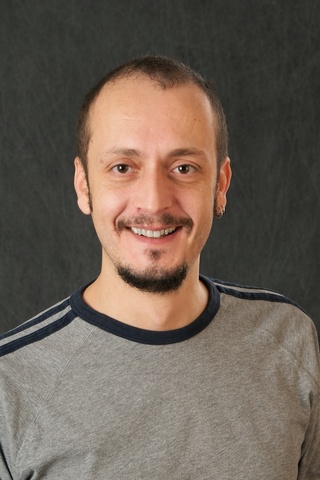
Vladimir Badovinac, PhD and his research lab have been awarded a new five-year R35 research grant from the NIH/NIGMS entitled “Cellular and Molecular Mechanisms Controlling Sepsis-Induced Immunoparalysis State.” The award totals $2,138,125. The project (R35GM161623-01) began on September 17, 2026 and will conclude on May 31, 2031.
The early stages of sepsis are characterized by a potentially detrimental hyperinflammatory state. However, patients who survive the cytokine storm phase of sepsis can enter a state of immunoparalysis, broadly defined by increased susceptibility to new or previously encountered infections, viral reactivation, and mortality that can persist for years after the initial septic insult. Sepsis-induced lymphopenia reduces the number of immune cells and influences the function of the remaining cells. However, sepsis-induced lymphopenia is transient, whereas the prolonged immunoparalysis (or immunosuppression) that develops, even after lymphocyte numbers normalize, is considered a leading contributor to the extended period of increased susceptibility to bacterial and viral pathogens that are normally controlled by the immune system in healthy individuals. Therefore, the lab will continue to pursue its long-term goal of precisely determining, at the cellular and molecular levels, sepsis-induced changes in human lymphocyte populations—including naïve and memory CD8 T cells, natural killer (NK) cells, and dendritic cells (DCs)—that contribute to and define the chronic state of immunoparalysis and the inability of immune cells to properly exert their effector functions. Patrick McGonagill, MD from the Department of Surgery will lead the effort in recruiting septic patients to obtain peripheral blood samples at various time points following sepsis onset.
The lab will: I) Explore the cellular and molecular mechanisms that control the maintenance and function of various CD8 T-cell subsets, including naïve (antigen-inexperienced) cells and bona fide infection- or vaccine-induced antigen-specific memory CD8 T-cell populations, following sepsis; II) Define the composition, maintenance, and function of the NK-cell compartment in sepsis survivors; and III) Determine whether and how sepsis alters the frequency and number of DC subsets and/or changes the maturation and effector functions of DCs in human peripheral blood.
The lab will also continue collaborations with institutions across the country to explore the idea that defining the function of particular lymphocyte subsets at various time points following sepsis onset—for example, IFN-γ production by T cells—can help predict clinical outcomes and facilitate immunological endotyping of adult and pediatric septic patients.
The pediatric sepsis study is supported by the recently awarded collaborative NIH/NICHD R01HD115952-01A1 (funded through April 2030), entitled “Precision Immune Endotyping to Guide Therapy in Pediatric Sepsis.” Mahil Rao, MD, PhD and Sarah Haskell, DO from the Department of Pediatrics serve as co-investigators. They are leading efforts to organize the clinical aspects of the study and, in the case of Dr. Rao, participating in the experimental execution of the proposed research.
In summary, addressing these key gaps in our understanding of sepsis-induced immunoparalysis may ultimately help identify new cellular and molecular targets for the development of more effective treatments for sepsis survivors.