Alcohol Use Disorder (AUD) is among the most prevalent mental health conditions in the United States, affecting over 10% of adults. Characterized by compulsive drinking, loss of control over alcohol intake, and negative emotional states during withdrawal, AUD exerts profound structural and functional effects on the brain—impairing cognition, emotion, and behavior.
Dr. Jia Luo’s laboratory investigates the molecular and cellular mechanisms underlying alcohol-induced brain damage and neurobehavioral dysfunction. In individuals with AUD, cerebellar atrophy and Purkinje cell (PC) degeneration are common neuropathological features. Alcohol exposure induces endoplasmic reticulum (ER) stress and activates the unfolded protein response (UPR) in the cerebellum and PCs, leading to structural and functional alterations.
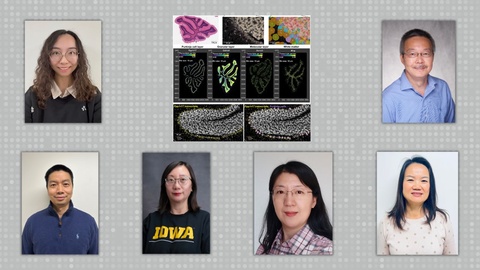
Recent work by Dr. Wen Wen, a research scientist in Luo’s lab, identified mesencephalic astrocyte-derived neurotrophic factor (MANF), an ER-inducible protein, as a critical mediator in this process. MANF is highly expressed in PCs and upregulated by alcohol exposure. To investigate its role, the team generated a PC-specific MANF knockout (KO) mouse model. Using spatial transcriptomics and high-throughput Xenium in situ analyses, Dr. Wen discovered that loss of MANF altered the transcriptomic landscape of PCs in a sex-specific manner, elevating the expression of genes involved in protein folding, transport, and ER stress response. MANF-deficient PCs exhibited heightened susceptibility to UPR activation and disrupted calcium homeostasis, particularly in a sex-dependent pattern. These findings indicate that MANF helps maintain ER and calcium balance, and its modulation could offer therapeutic potential for AUD-related cerebellar degeneration. Read the full study here.
In a complementary study, Dr. Di Hu, a postdoctoral fellow in Luo’s lab, examined the role of MANF in aging. The team observed a progressive, age-dependent decline of MANF expression across the brain, with the lowest levels detected in aged mice. PCs showed marked downregulation of MANF with age. Using PC-specific MANF KO mice, Dr. Hu demonstrated that MANF deficiency impaired motor coordination in females but not in males, while spatial learning and memory were reduced in both sexes. Interestingly, male MANF-deficient mice displayed increased sociability, whereas females exhibited social withdrawal. Together, these findings suggest that declining MANF expression contributes to age-associated neurodegeneration and neurobehavioral deficits. (Full study available here.)